Architectural Salvage in New Orleans
Two centuries of architectural heritage, preserved one board, beam, and bracket at a time. Explore the history, materials, and craft of salvage in one of America's most architecturally significant cities.
Request a Free Quote
Fill out the form below and our team will get back to you within one business day.
Why New Orleans Is the Capital of Architectural Salvage
New Orleans occupies a unique position in American architecture. The city's building stock spans three centuries and reflects French, Spanish, Creole, Caribbean, Greek Revival, Italianate, Victorian, Arts-and-Crafts, and Art Deco influences — often on the same block. When structures are damaged, demolished, or renovated, the materials they yield are not ordinary construction debris. They are artifacts of a built environment found nowhere else in the country.
Architectural salvage in New Orleans is not a modern invention. As far back as the 18th century, builders routinely reclaimed materials from collapsed or fire-damaged structures and incorporated them into new construction. The practice was born of necessity — lumber was expensive to ship downriver, bricks were laborious to manufacture by hand, and iron was imported from distant foundries. Reuse was common sense.
Today, architectural salvage is both a preservation practice and a thriving industry. Salvage dealers, deconstruction contractors, preservation organizations, and individual homeowners all participate in a cycle of recovery and reuse that keeps irreplaceable materials in service. The result is a city where a beam cut in 1840 might support a new roof in 2025, and where a transom window from a demolished Bywater shotgun can light a renovated Marigny cottage.
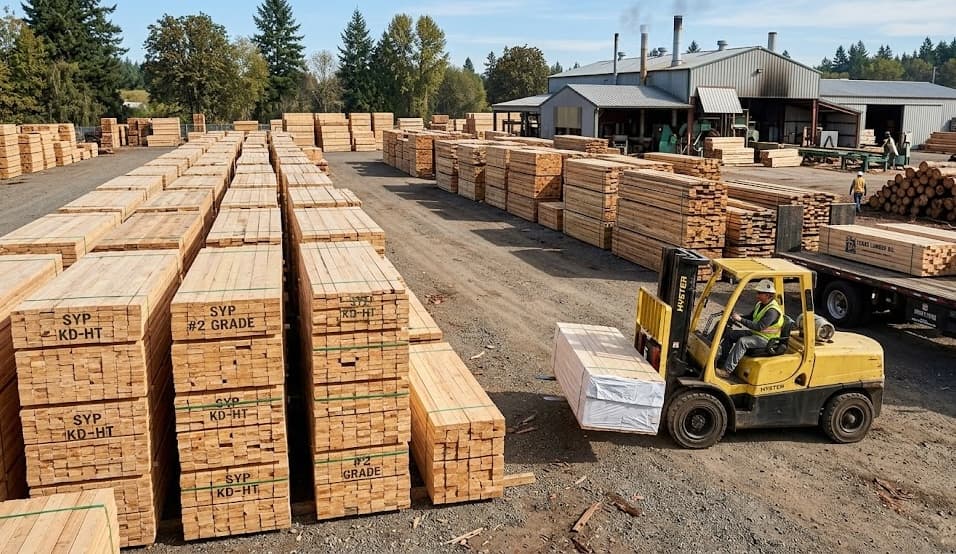
Salvaged cypress, heart pine, and antique brick — the raw materials of New Orleans preservation.
Three Centuries of Reuse
Colonial Period (1718-1803)
When the French established La Nouvelle-Orleans in 1718, building materials were scarce and expensive. Cypress was harvested from surrounding swamps, but milling capacity was limited. When the Great Fire of 1788 destroyed 856 structures and the fire of 1794 destroyed another 212, surviving materials — brick foundations, iron hardware, stone thresholds — were immediately reclaimed and incorporated into the rebuilt city. The Spanish colonial buildings that replaced the French originals often sat on French foundations and reused French ironwork.
Antebellum Era (1803-1861)
The American period brought explosive growth and a building boom fueled by cotton and sugar wealth. Grand townhouses, plantation homes, commercial warehouses, and civic buildings consumed vast quantities of lumber, brick, iron, and stone. As the city expanded upriver into the Garden District and downriver through the Faubourgs, older structures in the French Quarter were frequently modified or partially demolished, with their materials recycled into new construction. The practice was so common that period building contracts often specified the use of "second-hand materials" alongside new stock.
Post-Civil War & Reconstruction (1865-1900)
The economic devastation of the Civil War made material reuse essential rather than optional. Plantation buildings throughout rural Louisiana were dismantled for their lumber as the plantation economy collapsed. In the city, a generation of Victorian-era builders adapted older structures and freely reused materials from demolished buildings. The shotgun house — which became the dominant residential form during this period — was often built with a combination of new and salvaged lumber.
Early 20th Century (1900-1960)
Industrialization changed the salvage equation. Machine-milled lumber became cheap and abundant, reducing the economic incentive to reuse old wood. However, the tradition persisted in New Orleans more than in most American cities, partly because of the exceptional quality of the old-growth timber embedded in its older buildings. Local wrecking companies routinely sorted and resold usable materials from demolition sites.
Preservation Movement (1960-2005)
The founding of the Vieux Carre Commission in 1936 and the growth of the national preservation movement in the 1960s and 1970s reframed salvage as an act of heritage conservation. Organizations like the Preservation Resource Center of New Orleans promoted the reuse of historic building materials as both environmentally responsible and culturally important. Salvage dealers became curators of the city's architectural heritage, and demand for reclaimed materials grew steadily.
Post-Katrina (2005-Present)
Hurricane Katrina devastated over 200,000 homes in the New Orleans metropolitan area. In the years that followed, thousands of damaged structures were demolished — and the scale of material loss was staggering. Preservation groups, salvage contractors, and volunteer organizations mounted an unprecedented effort to recover architectural materials before demolition crews arrived. Heart pine flooring, cypress siding, transom windows, mantels, and hardware were rescued from neighborhoods across the city. This massive salvage operation seeded the reclaimed lumber market that thrives in New Orleans today.
What Gets Salvaged in New Orleans
From floorboards to finials, nearly every component of a historic building has salvage value when properly recovered and processed.
Heart Pine Flooring
Longleaf heart pine floors are among the most coveted salvage finds in New Orleans. Cut from old-growth trees that took 200 to 500 years to mature, this wood exhibits 20 to 40 growth rings per inch and a resin content so high the boards are practically waterproof. Original heart pine floors in antebellum homes were often face-nailed with hand-forged square nails, and each nail hole tells part of the story. Once de-nailed and re-milled, reclaimed heart pine flooring commands premium prices and delivers beauty that cannot be replicated with modern plantation-grown timber.
Bald Cypress Beams & Siding
Louisiana bald cypress has been the backbone of local construction since the French colonial period. Old-growth cypress contains high concentrations of cypressene oil, giving it extraordinary resistance to rot, termites, and fungal decay. Salvaged cypress beams from 19th-century sugar mills and warehouses often measure 12x12 inches or larger and can span 30 feet or more. Cypress siding — especially the narrow beveled clapboard common on Creole cottages — is routinely salvaged and reinstalled on restoration projects throughout the historic districts.
Slate Roofing
Many of the grand homes in the Garden District and Uptown feature Welsh, Vermont, or Buckingham slate roofs dating to the mid-1800s. When a slate roof is removed for repair or building demolition, individual slates can be carefully salvaged, sorted by size and thickness, and reused on restoration projects. Good-quality salvaged slate can last another 100 years — making it one of the most sustainable roofing materials available.
Cast Iron & Wrought Iron
The iconic cast-iron galleries of the French Quarter are world-famous, but salvaged ironwork turns up across the city — railings, fence panels, gate posts, column capitals, decorative brackets, and vent covers. Wrought iron (hand-forged, pre-1850) is distinguishable from cast iron (molded, post-1850) by its fibrous grain and hammer marks. Both types are actively salvaged and restored for use on historic renovations.
Doors & Transom Windows
New Orleans doors are architectural statements. Salvage yards across the city stock Victorian double-entry doors with original etched glass, Creole cottage batten doors, Arts-and-Crafts four-panel doors, louvered shutters, and elaborate transom windows with stained or leaded glass. These elements carry the craftsmanship of an era when every entryway was designed to make an impression.
Brick & Stone
Reclaimed New Orleans brick — often soft, hand-molded "lake brick" from the early 1800s — has a warm pink-orange color and irregular texture that modern machine-pressed brick cannot match. Salvaged brick is used for patios, walkways, garden walls, interior accent walls, and chimney restoration. Antique marble mantels, granite lintels, and limestone steps are also regularly salvaged from demolished or renovated buildings.
Hardware & Fixtures
Antique doorknobs, hinges, escutcheon plates, cabinet pulls, window latches, shutter dogs, and lock sets are all salvaged and resold. Original brass and bronze hardware from the Victorian and Edwardian periods is especially prized. Period-correct lighting fixtures — gas-to-electric conversions, crystal chandeliers, schoolhouse pendants, and industrial factory lights — round out the hardware category.
Mantels & Millwork
Ornate wooden mantels, crown molding profiles, baseboards, door and window casings, stair balusters, newel posts, porch columns, and decorative corbels are all staples of the New Orleans salvage trade. Many of these elements were milled from old-growth cypress or heart pine and feature hand-carved details that would cost thousands of dollars to reproduce today.
Famous Buildings & Their Second Lives
Some of the city's most iconic structures have contributed salvaged materials to the broader building stock — ensuring their legacy endures even when the original structure is lost or transformed.
The Jax Brewery Building
Est. 1891Originally the Jackson Brewing Company, this massive Romanesque Revival structure on Decatur Street was one of the largest breweries in the South. After a devastating fire in 1974 and subsequent conversion to a shopping mall, portions of the original heavy timber framing, industrial hardware, and decorative brickwork were salvaged by local reclamation companies. Cypress beams from the brewery have been incorporated into restaurants and homes across the city.
Charity Hospital
Est. 1939The Art Deco Charity Hospital on Tulane Avenue served New Orleans for nearly 70 years before Hurricane Katrina forced its closure in 2005. The massive structure — one of the largest hospitals in the country — sat vacant for over a decade, and during renovation planning, salvage teams recovered terrazzo floor sections, marble wainscoting, brass elevator doors, and period light fixtures. The building is now being redeveloped, but many of its original materials live on in other projects.
The Falstaff Brewery
Est. 1903This Richardsonian Romanesque landmark on Gravier Street brewed beer for over a century before closing in 1978. During its eventual conversion to residential apartments, contractors salvaged massive longleaf pine timbers, copper brewing vessels, industrial gears, original signage, and tens of thousands of bricks. The salvaged materials have been distributed to builders, artists, and collectors throughout Louisiana.
The D.H. Holmes Department Store
Est. 1849Once the grande dame of Canal Street retail, D.H. Holmes operated from an elaborate cast-iron-fronted building for nearly 150 years. When the property was converted to a hotel in the 1990s, salvage teams preserved ornamental iron facades, display case woodwork, and original mechanical hardware. Elements from this building occasionally surface at local salvage dealers.
Pre-Katrina Shotgun Houses
Est. 1830s-1920sThousands of shotgun houses — the quintessential New Orleans house type — were damaged beyond repair by Hurricane Katrina in 2005. Before demolition, salvage teams recovered heart pine flooring, cypress siding, transom windows, porch columns, gingerbread trim, and original hardware from hundreds of these homes. This material now serves as the raw stock for much of the reclaimed lumber available in the New Orleans market today.
Preservation vs. Demolition: Where Salvage Fits
In New Orleans, the question of whether to preserve, rehabilitate, or demolish a historic building is rarely simple. The city's preservation community rightfully argues that keeping a building intact preserves not just its materials but its spatial relationships, craftsmanship, and cultural meaning in ways that salvage alone cannot replicate. A pile of reclaimed boards, no matter how beautiful, is not the same thing as a standing Creole cottage.
At the same time, preservation is not always possible. Buildings suffer catastrophic damage from hurricanes, floods, fire, neglect, and termites. Sometimes the cost of rehabilitation exceeds the economic capacity of the owner or the community. In these cases, salvage becomes the next-best option — a way to recover what would otherwise be lost entirely.
The most thoughtful approach treats salvage as part of a continuum. The first priority is always to preserve the building in place. When that is not feasible, deconstruction — the careful disassembly of a structure to maximize material recovery — is far preferable to mechanical demolition, which destroys most of the building's material value. A deconstructed building might yield 85 to 95 percent of its materials in reusable condition; a mechanically demolished building yields perhaps 10 to 20 percent.
Our deconstruction service exists precisely to fill this gap. When a building cannot be saved, we recover its materials with the same care that a preservationist would apply to restoring it. The lumber, brick, hardware, and architectural elements we recover go on to serve new buildings — carrying forward the quality, character, and story of the original structure.
Hurricane Katrina and the Salvage Imperative
When Hurricane Katrina struck on August 29, 2005, the floodwaters inundated roughly 80 percent of the city. Over 200,000 homes were damaged or destroyed across the metropolitan area. The scale of destruction was beyond anything the American preservation community had ever faced — entire neighborhoods of historic shotgun houses, Craftsman bungalows, Creole cottages, and camelback doubles were condemned and slated for demolition.
In the months and years that followed, a coalition of preservation organizations, volunteer groups, and salvage contractors launched an extraordinary effort to recover architectural materials before the bulldozers arrived. The Preservation Resource Center of New Orleans organized salvage brigades that worked alongside demolition crews, pulling heart pine flooring, cypress siding, ornamental ironwork, mantels, doors, and windows from condemned structures.
The numbers were staggering. Tens of thousands of board feet of old-growth heart pine and cypress were recovered from Lower Ninth Ward shotgun houses alone. Entire warehouses were filled with salvaged doors, windows, shutters, and hardware. The materials were cleaned, sorted, and distributed through salvage yards, nonprofit warehouses, and directly to homeowners rebuilding in the same neighborhoods.
This post-Katrina salvage effort fundamentally shaped the reclaimed lumber market in New Orleans. Much of the reclaimed heart pine and cypress available today in the Gulf South traces its origin to this period. The devastation of Katrina, paradoxically, created the largest single infusion of high-quality reclaimed building materials in the region's history.
Beyond the materials themselves, the post-Katrina experience changed attitudes. Contractors, architects, and homeowners who might never have considered reclaimed lumber discovered its superior quality — and many became lifelong advocates for the use of salvaged materials. The rebuilding of New Orleans proved that reclaimed materials are not merely nostalgic curiosities but practical, high-performance building products.
Salvage in New Orleans' Historic Districts
Each of the city's historic districts has its own architectural character and its own salvage profile. Understanding the building traditions of each neighborhood helps identify what materials are most likely to be found — and most needed.
French Quarter (Vieux Carre)
The oldest neighborhood in the city, dating to 1718. Despite its French name, most surviving buildings are Spanish colonial or American period. Expect heavy brick construction with stuccoed facades, wrought and cast iron galleries, French doors, fanlight transoms, slate roofs, and cypress structural members. Salvage is tightly regulated by the Vieux Carre Commission.
Garden District
Developed in the 1830s-1860s by wealthy American merchants. Grand Greek Revival and Italianate mansions with massive columns, ornate plaster cornices, marble mantels, heart pine floors, and cast iron fences. Salvage opportunities typically arise during interior renovations rather than demolitions, as very few Garden District structures are ever demolished.
Marigny & Bywater
Creole faubourgs with dense rows of shotgun houses, Creole cottages, and camelback doubles. These neighborhoods yield heart pine flooring, cypress siding, turned porch columns, transom windows, and original hardware in large quantities. Post-Katrina demolitions and ongoing renovations continue to release salvage material from this area.
Lower Garden District
A transitional neighborhood with a mix of antebellum mansions, Victorian doubles, commercial buildings, and warehouses. Salvage finds range from grand mantels and ornamental plaster to industrial timber beams and warehouse hardware. The neighborhood's commercial corridor along Magazine Street has been a particular source of salvaged commercial fixtures.
Treme
One of the oldest African American neighborhoods in the country, Treme is rich in Creole cottages and shotgun houses built between 1800 and 1900. Salvaged materials from Treme carry deep cultural significance. Cypress structural members, simple but elegant millwork, and hand-forged hardware are characteristic finds.
Central City & Uptown
These neighborhoods feature a broad mix of Victorian shotgun houses, Queen Anne cottages, Craftsman bungalows, and early 20th-century commercial buildings. Salvage yields include heart pine and oak flooring, decorative shingles, stained glass, elaborate porch trim, and early electrical fixtures. The housing stock ranges from modest to grand, offering materials at every price point.
Legal Considerations for Architectural Salvage
Salvaging materials from historic buildings in New Orleans involves a web of local, state, and federal regulations. Understanding the rules protects both the salvager and the heritage.
Demolition Permits
The City of New Orleans requires a demolition permit for any structure being taken down. In historic districts, the Historic District Landmarks Commission (HDLC) must review and approve the demolition — and they may require that certain architectural elements be salvaged and preserved before the wrecking crew arrives. Failing to obtain proper permits can result in fines ranging from $500 to $50,000 per violation.
Historic District Regulations
Properties located within locally designated historic districts (French Quarter, Garden District, Lower Garden District, Marigny, Bywater, Esplanade Ridge, and others) are subject to HDLC oversight. Removal of original materials — even interior elements — may require HDLC approval. Conversely, repairs to contributing structures must use materials and methods consistent with the property's period of significance, making salvaged materials the ideal (and sometimes required) choice.
National Register Properties
Buildings listed on the National Register of Historic Places — or located within National Register districts — receive federal protections that can affect salvage activities. While National Register listing does not prevent demolition, owners who use federal tax credits for rehabilitation must follow the Secretary of the Interior's Standards, which strongly favor preservation and reuse of original materials.
Asbestos & Lead Paint
Louisiana law requires asbestos and lead paint surveys before demolition of structures built before 1978. Salvaged materials from older buildings may contain lead paint (common on exterior siding, trim, and window sashes) or asbestos (found in plaster, floor tiles, pipe insulation, and some siding products). Proper testing and, when necessary, abatement must occur before salvaged materials can be safely reused.
Ownership & Chain of Title
Architectural salvage must have a clear chain of custody. Reputable salvage dealers document where materials came from and verify that the seller had legal authority to remove them. Purchasing architectural materials without provenance documentation carries legal and ethical risks — stolen building materials remain the property of the building owner regardless of how many times they change hands.
How Architectural Salvage Works
Site Assessment
Before any material is removed, the structure is surveyed to identify what is worth salvaging, what hazards exist (lead paint, asbestos, structural instability), and how the work should be sequenced. This assessment determines whether full deconstruction or selective salvage is appropriate.
Permitting & Documentation
Required permits are obtained from the city, and in historic districts, HDLC approval is secured. The structure and its key features are photographed and documented before removal begins. This documentation serves as a record for preservation archives and as provenance for the salvaged materials.
Careful Removal
Materials are removed by hand or with light equipment to minimize damage. Flooring is pried up board by board. Siding is stripped course by course. Doors, windows, mantels, and fixtures are removed intact with their hardware. Structural beams are extracted after load paths are temporarily supported.
Processing & Sorting
Salvaged materials are transported to a processing facility where they are de-nailed, cleaned, sorted by species and grade, and prepared for resale. Lumber may be re-milled to remove damaged surfaces and bring boards to consistent dimensions. Hardware is cleaned and tested. Doors and windows are assessed for restoration potential.
Inventory & Sale
Processed materials enter inventory at salvage yards, lumber dealers, and specialty retailers. Many items are sold directly to contractors and homeowners working on restoration projects. Others are held in inventory until the right buyer emerges — some rare architectural elements can wait years for the perfect project.
Reuse & New Life
Salvaged materials are incorporated into new construction, renovation, and restoration projects. A cypress beam from an 1850s warehouse becomes a mantel in a French Quarter restaurant. Heart pine flooring from a demolished shotgun house is installed in a Bywater renovation. The cycle of use continues.
The Environmental Case for Salvage
Architectural salvage is one of the most impactful forms of recycling. Unlike materials that are melted down, ground up, or chemically reprocessed, salvaged building materials are reused in their original form — preserving all of the energy, resources, and craftsmanship that went into their creation.
Consider a single board of reclaimed heart pine flooring. The longleaf pine tree that produced it grew for 200 to 400 years. It was felled, transported, milled, dried, and installed — a process requiring enormous inputs of energy and labor. If that board goes to a landfill when the building is demolished, all of that embodied energy is wasted. If it is salvaged and reinstalled, the only new energy required is the labor of recovery and re-milling — a fraction of the original investment.
The EPA estimates that construction and demolition debris accounts for roughly 600 million tons of waste annually in the United States. Architectural salvage and deconstruction divert a meaningful portion of this waste stream. A single deconstructed shotgun house can keep 15 to 20 tons of material out of the landfill while producing thousands of board feet of reusable lumber, dozens of reusable doors and windows, and hundreds of pounds of salvageable hardware.
Learn more about our environmental commitments on our sustainability page or explore our environmental impact report.
How We Participate in Architectural Salvage
As a reclaimed lumber dealer rooted in New Orleans, we are active participants in the architectural salvage ecosystem. We source materials from deconstruction projects, renovation contractors, estate sales, and other salvage dealers throughout the Gulf South. Every piece of lumber, every beam, and every board in our inventory has a story — and we work hard to preserve that provenance.
Our deconstruction crews carefully disassemble structures slated for demolition, recovering lumber, brick, hardware, and architectural elements. Our custom milling facility transforms raw salvaged material into finished products — flooring, paneling, dimensional lumber, and custom profiles. And our yard in New Orleans serves as a clearinghouse where architects, contractors, woodworkers, and homeowners can find the reclaimed materials their projects demand.
Whether you are restoring a historic home, building new with reclaimed materials, or simply looking for a unique piece of New Orleans architectural history, we invite you to get in touch and explore what we have to offer.
Explore Our Salvaged Inventory
Browse our current stock of reclaimed lumber, beams, flooring, and architectural elements — all sourced from the rich building heritage of New Orleans and the Gulf South.