Complete Buyer's Guide to Reclaimed Lumber
Everything you need to know before purchasing reclaimed wood — from evaluating quality and calculating quantities to negotiating prices and avoiding costly mistakes.
Request a Free Quote
Fill out the form below and our team will get back to you within one business day.
Why Buying Reclaimed Lumber Is Different
Buying reclaimed lumber is not like walking into a big-box store and pulling dimensional lumber off a rack. Every board has a unique history, character, and set of properties that depend on the species, the building it came from, how it was salvaged, and how it was processed afterward. This variability is precisely what makes reclaimed wood beautiful — but it also means you need to know what you are looking at before you commit your money.
This guide is written by the team at Lumber New Orleans. We have spent years salvaging, processing, and selling reclaimed lumber across the Gulf South, and we have seen every mistake a buyer can make. Whether you are a homeowner planning your first accent wall, a contractor sourcing flooring for a commercial project, or a furniture maker hunting for the perfect slab, this guide will help you buy smarter, avoid pitfalls, and get the best value for your investment.
We have organized this guide into twelve sections covering every aspect of the purchasing process, from initial quality evaluation through post-delivery storage. Read it end to end, or jump to the section most relevant to your current needs.
Understanding What You Are Buying
Reclaimed lumber is wood that has been salvaged from existing structures — barns, warehouses, factories, bridges, railroad trestles, river pilings, and demolished homes. The term "reclaimed" means the wood has had a previous useful life and is being repurposed rather than discarded. This distinguishes it from "distressed" or "weathered-look" lumber, which is new wood that has been artificially aged with chemicals, wire brushing, or mechanical beating.
The appeal of genuine reclaimed lumber lies in its superior wood quality. Most reclaimed wood comes from old-growth forests that were harvested in the 18th and 19th centuries, before modern forestry practices replaced old-growth stands with fast-growing plantation timber. Old-growth wood is denser, more dimensionally stable, more resistant to decay, and more visually complex than anything available from modern sawmills.
In the New Orleans market, the most common reclaimed species are bald cypress, longleaf heart pine, white oak, and red oak. Cypress is the signature wood of Louisiana — salvaged from Creole cottages, shotgun houses, sugar mills, and cypress cisterns. Heart pine comes primarily from industrial buildings, warehouses, and military structures built during the late 1800s and early 1900s. Both species exhibit remarkable grain density and natural durability that modern lumber cannot match.
Quality Evaluation Checklist
Use this checklist to evaluate any reclaimed lumber before purchasing. Every item should pass inspection — a single serious failure can mean wasted money and a compromised project.
Grain Density
Tight, closely spaced growth rings (15-40 per inch in old-growth)
Widely spaced rings (fewer than 6 per inch) indicate fast-growth plantation wood being sold as reclaimed
Moisture Content
Between 6% and 12% for interior use, verified with a pin-type moisture meter
Above 15% moisture risks warping, cupping, and mold growth after installation
Nail and Metal Removal
All nails, screws, and embedded metal have been removed or are clearly marked
Hidden metal can destroy saw blades and planer knives, costing hundreds in repairs
Insect Damage
No active insect galleries, frass (sawdust piles), or exit holes with fresh edges
Pinhole patterns with sharp edges and sawdust indicate active infestation — reject immediately
Structural Integrity
Wood is solid when tapped, with no hollow or punky areas indicating internal decay
Soft or spongy sections mean rot has compromised the wood fiber — it cannot be restored
Surface Condition
Character marks add value: saw marks, nail holes, patina, minor checking are desirable
Deep splits, severe warping, heavy mold staining, or chemical contamination are deal-breakers
Species Identification
Seller can identify the species and explain its origin (building type, location, era)
Vague claims like "antique wood" without species ID suggest the seller cannot verify authenticity
Dimensional Consistency
Boards are consistent in thickness within 1/16" and have been properly surfaced
Wildly inconsistent thickness means the lumber was not properly processed after salvage
What to Look For: Grain, Patina, and Character
Grain Pattern
The grain pattern tells the story of how the tree grew. Tight, straight grain indicates slow, consistent growth in a dense forest stand. Cathedral grain (flame pattern) appears in flat-sawn boards and is prized for visual interest. Quartersawn boards show a tight, ribbon-like pattern and are the most dimensionally stable. For flooring and furniture, quartersawn and rift-sawn boards will move the least with seasonal humidity changes.
Patina and Color
Authentic patina develops over decades of exposure to air, light, and use. Heart pine deepens from amber to a rich caramel brown. Cypress can range from silver-gray (exterior exposure) to warm honey (interior). Oak darkens from golden to a deep whiskey brown. This patina cannot be faked and is one of the most valuable characteristics of reclaimed wood. Some buyers prefer the aged surface; others want it planed away to reveal fresh wood underneath — both approaches are valid.
Nail Holes and Tool Marks
Nail holes, mortise pockets, bolt holes, and saw marks are the fingerprints of a board's previous life. Circular saw marks from 19th-century mills, hand-hewn axe marks from timber-frame construction, and square nail holes from early framing all tell a story. These marks are considered desirable character in most applications. The key is that they should be natural — not added artificially with a drill press and wire brush.
Edge Condition
Examine the edges of each board. Slight wane (bark edge) is common in reclaimed lumber and adds character. Heavy wane reduces the usable width. Check for edge damage from pry bars used during salvage — deep gouges along the edges can waste significant material when the board is trimmed to a clean edge. For flooring with tongue-and-groove milling, clean, straight edges are essential.
How to Calculate Quantities
Ordering too little means project delays and difficulty matching additional material. Ordering too much wastes money. Use these formulas to get it right.
Flooring
Formula: Square footage of room + 10-15% waste factor
Example: A 300 sq ft room needs 330-345 sq ft of flooring material to account for cuts, defects, and fitting waste.
Pro Tip: Reclaimed flooring often has more variation than new flooring, so plan for the higher end of the waste range (15%). Random-width installations waste less than uniform-width.
Wall Paneling / Shiplap
Formula: Wall height x wall width = sq ft, then add 10% waste
Example: An 8 ft x 12 ft accent wall is 96 sq ft. Order 106 sq ft of material.
Pro Tip: Vertical installations waste slightly more than horizontal because you cannot use short offcuts as easily. For herringbone or diagonal patterns, add 20% waste.
Beams and Timbers
Formula: Measure exact length needed + 6 inches for trimming each end
Example: A 14 ft ceiling span needs a beam at least 14 ft 6 inches to allow clean end cuts.
Pro Tip: Beams are sold by the linear foot. Always request specific dimensions — a 6x8 and an 8x8 at the same length are very different prices.
Decking
Formula: Deck sq ft / board coverage factor + 15% waste
Example: For 5.5-inch-wide boards with 1/8-inch gap, each board covers about 0.47 sq ft per linear foot. A 200 sq ft deck needs approximately 490 linear feet of decking.
Pro Tip: Reclaimed decking boards vary in width. Mix widths for a traditional look and to minimize waste.
Furniture Projects
Formula: Calculate board feet: (Thickness x Width x Length) / 144
Example: A 2-inch-thick, 12-inch-wide, 72-inch-long slab is 12 board feet.
Pro Tip: When buying lumber by the board foot for furniture, always buy 25-30% more than your cut list requires. You will lose material to defect removal, jointing, planing, and saw kerfs.
Questions to Ask Any Supplier
A reputable reclaimed lumber dealer will answer all of these questions confidently and without hesitation. If a supplier is evasive, vague, or dismissive when you ask these questions, consider it a warning sign and look elsewhere.
Where was this wood salvaged from? Can you provide the specific building or location?
What species is this lumber? How do you verify species identification?
Has this wood been kiln-dried? What temperature and duration was the kiln cycle?
Has all metal been removed? Do you guarantee your lumber is nail-free?
What is the current moisture content? Can I verify with my own meter?
Do you have documentation of the salvage source and chain of custody?
Has this wood been tested or treated for lead paint, arsenic, or other contaminants?
What is your return or exchange policy if the wood does not meet my expectations?
Can I visit your facility and hand-select my boards?
Do you offer milling services — planing, ripping, tongue-and-groove, or custom profiles?
What is the typical lead time from order to delivery?
Do you deliver? What are the delivery charges and minimum order requirements?
Red Flags to Avoid
Protect yourself from dishonest sellers and substandard material. These warning signs should prompt you to walk away or demand further verification.
No Physical Inventory
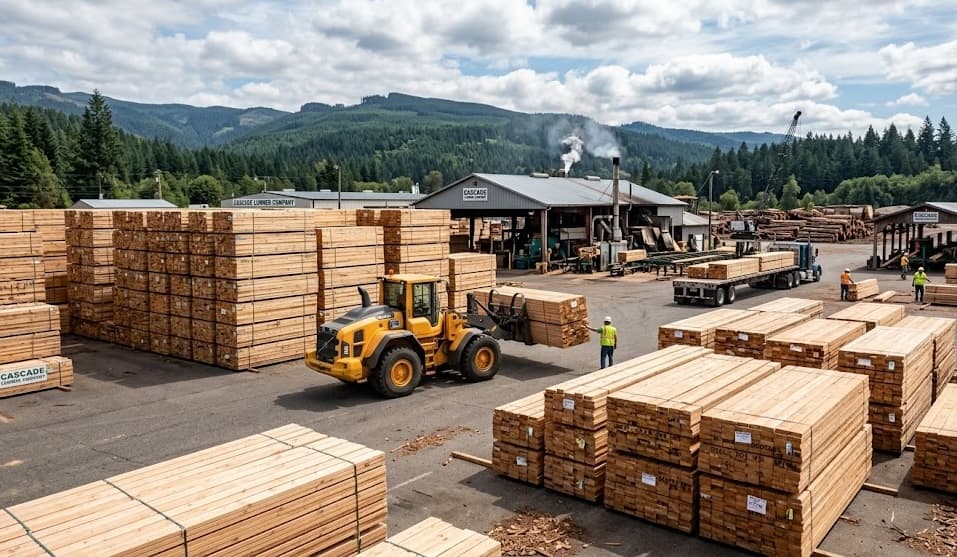
A reputable reclaimed lumber dealer maintains a physical yard or warehouse where you can see and touch the product. Online-only dealers with stock photos and no verifiable location are high-risk. The photos may not represent what you receive.
Unusually Low Prices
Genuine reclaimed lumber requires significant labor to salvage, de-nail, clean, kiln-dry, and mill. If prices are dramatically lower than other dealers, the wood may not be truly reclaimed, may not have been properly processed, or may have hidden defects.
Vague Origin Stories
Quality reclaimed lumber has a story. A dealer who cannot tell you where the wood came from — at least the type of building, general location, and approximate era — may be reselling new wood with artificial distressing passed off as reclaimed.
No Kiln-Drying Certificate
Kiln drying is essential to kill insects, stabilize moisture content, and prevent mold. Any dealer shipping reclaimed lumber without kiln drying (or at minimum, verified air-dried moisture levels below 12%) is cutting a critical corner.
Refusal to Allow Inspection
If a dealer will not let you visit their facility, inspect inventory in person, or send detailed photos of the specific boards you are purchasing, proceed with extreme caution. Reputable dealers welcome inspection.
No Return Policy
Reclaimed wood is inherently variable. A responsible dealer stands behind their product with a clear return or exchange policy for material that arrives damaged, infested, or significantly different from what was represented.
Pressure Tactics
While reclaimed lumber inventory does move quickly, a dealer who pressures you with artificial urgency ("this is the last batch, you have to buy today") is using sales tactics, not serving your interests. Good wood is worth waiting for.
No Knowledge of Building Codes
A quality reclaimed lumber supplier understands how their products interact with building codes — structural grading, fire ratings, lead paint regulations, and moisture requirements. Ignorance of these topics suggests inexperience.
Price Negotiation Tips
Reclaimed lumber pricing is not standardized like dimensional lumber from a home center. These strategies will help you get fair pricing without compromising on quality.
Buy in Volume
Most reclaimed lumber dealers offer volume discounts starting at 500 board feet or 500 square feet. Ask about price breaks at 500, 1,000, and 2,500 units. The per-unit cost typically drops 10-20% at higher volumes.
Be Flexible on Species and Dimensions
If you can accept a mix of similar species (for example, any Southern yellow pine rather than exclusively longleaf heart pine) or a range of widths, the dealer can pull from a larger inventory and often offers a better price.
Accept "Utility Grade" for Hidden Applications
If some of your project is concealed (subfloor, framing, backing), ask about lower-grade or short-length material at reduced prices. This wood is structurally fine but has more cosmetic defects.
Time Your Purchase
Late fall and winter are typically slower seasons for the reclaimed lumber market. Dealers may be more willing to negotiate during these months. Summer is peak season and prices are firmest.
Ask About Remnants and Shorts
Dealers often accumulate short pieces (under 4 feet) and remnants from milling operations. These are perfect for small projects, cutting boards, picture frames, and accent pieces — and they are usually priced at 40-60% off regular rates.
Bundle Services
If you need milling, finishing, or delivery, bundling these services with your lumber purchase often yields a better total price than buying lumber from one source and hiring separate contractors for processing.
Understanding What Drives Pricing
Reclaimed lumber prices vary widely based on several factors. Understanding these factors helps you evaluate whether a quoted price is fair and identify opportunities to save money without sacrificing quality.
Species is the single biggest price driver. Old-growth heart pine and antique white oak command premium prices because of their density, beauty, and relative scarcity. Reclaimed cypress is moderately priced in the Louisiana market because of its regional availability. Mixed species and softwoods are generally the most affordable options.
Processing level significantly affects cost. Rough-sawn, de-nailed boards fresh from salvage are the least expensive. Each additional processing step — planing, ripping to width, tongue-and-groove milling, sanding, finishing — adds to the final price. A fully finished, tongue-and-groove heart pine floor can cost three to four times more per square foot than the same material sold rough.
Grade and appearance matter. Clear, defect-free boards with consistent color and straight grain are graded higher and priced accordingly. Character-grade material with more knots, nail holes, color variation, and minor defects is typically 30-50% less expensive and is preferred by many designers for its authenticity.
Dimensions affect pricing. Wide boards (over 10 inches) and long boards (over 10 feet) are less common and command premiums. Thick stock (8/4 and above) is rarer than standard 4/4 and 5/4 material. If your project can accommodate narrower or shorter boards, you will have more inventory to choose from and better pricing.
Provenance and documentation add value. Lumber with a verified story — traceable to a specific historic building, salvaged from a notable structure, or documented with chain-of-custody records — carries a premium. This is especially relevant for LEED projects requiring documented reclaimed content and for high-end clients who value the story as much as the wood.
Delivery Considerations
Access Assessment
Before ordering, evaluate your delivery site. Can a flatbed truck access your property? Is there a forklift-accessible unloading area? For beams and timbers, is there crane access? Communicate any access limitations to your supplier before placing the order.
Weight Estimation
Reclaimed lumber is often significantly heavier than modern kiln-dried stock due to higher density in old-growth material. A thousand board feet of reclaimed heart pine can weigh over 3,500 pounds. Make sure your delivery plan accounts for the actual weight.
Unloading Equipment
For orders over 500 board feet, you will likely need mechanical assistance to unload. Options include: a forklift on-site, a truck with a liftgate, a boom truck for beams, or at minimum several strong helpers and a set of lumber rollers.
Inspection Upon Delivery
Inspect every piece before signing the delivery receipt. Check for damage that occurred in transit — broken ends, deep scratches from strapping, water staining from rain exposure during transport. Document any damage with photos immediately.
Delivery Timing
Schedule delivery as close to your installation date as practical, but allow at least one to two weeks for the lumber to acclimate to your job site conditions. This is especially critical for flooring, which needs to reach equilibrium moisture content before installation.
Storage After Purchase
How you store reclaimed lumber between delivery and installation directly affects the quality of your finished project. Follow these rules to protect your investment.
Store Indoors When Possible
Reclaimed lumber should be stored in the same environment where it will be installed. This allows it to acclimate to the ambient temperature and humidity. For flooring, NWFA guidelines recommend a minimum seven-day acclimation period.
Stack on Stickers
Place 3/4-inch-thick stickers (spacer strips) between each layer of boards, spaced every 24 inches along the length. This allows air circulation around all faces and prevents moisture from becoming trapped between boards.
Keep Off the Ground
Never stack lumber directly on a concrete floor or bare ground. Use at least 4-inch-high bearers to elevate the bottom layer. Concrete wicks moisture and will cause the bottom boards to absorb water and swell.
Protect from Sun and Rain
If outdoor storage is unavoidable, cover the stack with a tarp that extends past the ends but leave the sides open for ventilation. Direct sun exposure will cause rapid surface drying and checking; rain will raise moisture content and promote mold.
Weight the Top
Place heavy weight evenly across the top of the stack to keep boards flat while they acclimate. Concrete blocks, additional stickered lumber, or a weighted pallet all work. This counteracts the natural tendency of boards to cup or bow during moisture equalization.
Monitor Moisture
Check moisture content with a pin-type meter when lumber arrives and again before installation. Interior wood should be between 6% and 9%. If content is above 12%, extend the acclimation period or consider supplemental drying with dehumidifiers or fans.
Building a Relationship with Your Supplier
Unlike commodity lumber, reclaimed wood is a relationship business. The best deals and the best material go to repeat customers who have built trust with their supplier. Here is how to cultivate that relationship.
Start by visiting the supplier's yard in person. Walk through their inventory, ask questions, and demonstrate genuine knowledge and interest. Suppliers invest time in customers who understand the product and appreciate the work that goes into salvaging and processing it.
Be clear and specific about your needs. Provide detailed specifications including species, dimensions, grade, quantity, processing requirements, and timeline. The more information you provide upfront, the better the supplier can serve you and the less likely you are to experience misunderstandings or delays.
Pay on time and communicate promptly. In the reclaimed lumber world, suppliers who hold inventory for a customer are tying up capital and warehouse space. Respect their business by following through on commitments, paying invoices promptly, and giving advance notice if your project timeline changes.
Refer others. Word-of-mouth referrals are the lifeblood of specialty lumber businesses. When you send other buyers to a supplier who treated you well, you strengthen the relationship and often earn priority access to new inventory and better pricing on future orders.
Pre-Purchase Checklist
Run through this final checklist before placing your order. Every item should be confirmed to ensure a smooth purchasing experience.
Species has been positively identified and verified
Moisture content has been measured and is within acceptable range
All boards inspected for active insect damage — none found
Structural integrity confirmed — no decay, soft spots, or punky areas
All nails and embedded metal have been removed
Dimensional consistency verified — thickness and width are uniform
Quantity calculated with appropriate waste factor included
Price agreed upon in writing — including all processing and delivery fees
Delivery logistics confirmed — access, equipment, and timing
Storage plan in place — indoor space, stickers, and moisture monitoring
Acclimation period scheduled — minimum 7 days before installation
Return and exchange policy understood and acceptable
Payment terms and schedule clearly documented
Project timeline communicated to supplier for inventory hold
Ready to Buy with Confidence?
At Lumber New Orleans, we welcome informed buyers. Visit our yard, inspect our inventory, and ask us every question on this list. We are proud of our material and transparent about every aspect of our process.