Sustainability Certifications & Green Building
How reclaimed lumber helps your project earn points and meet requirements under LEED, FSC, WELL, Living Building Challenge, Green Globes, and the National Green Building Standard.
Request a Free Quote
Fill out the form below and our team will get back to you within one business day.
Reclaimed Lumber Is a Green Building Powerhouse
Choosing reclaimed lumber is one of the most impactful sustainability decisions you can make in a building project. It simultaneously addresses multiple green building priorities: reducing virgin resource consumption, diverting waste from landfills, lowering embodied carbon, avoiding chemical off-gassing, and connecting occupants to natural materials.
This makes reclaimed wood uniquely efficient for earning green building certification points. A single material decision — specifying reclaimed lumber instead of new — can contribute to credits across multiple certification categories, from materials sourcing and waste diversion to indoor air quality and biophilic design.
This guide covers the six most relevant green building certifications and standards, explains exactly how reclaimed lumber contributes to each, and details the documentation needed to claim the credits. Whether you are an architect specifying materials for a LEED project, a homeowner pursuing NGBS certification, or a developer evaluating the Living Building Challenge, this guide will help you maximize the green building value of reclaimed wood.
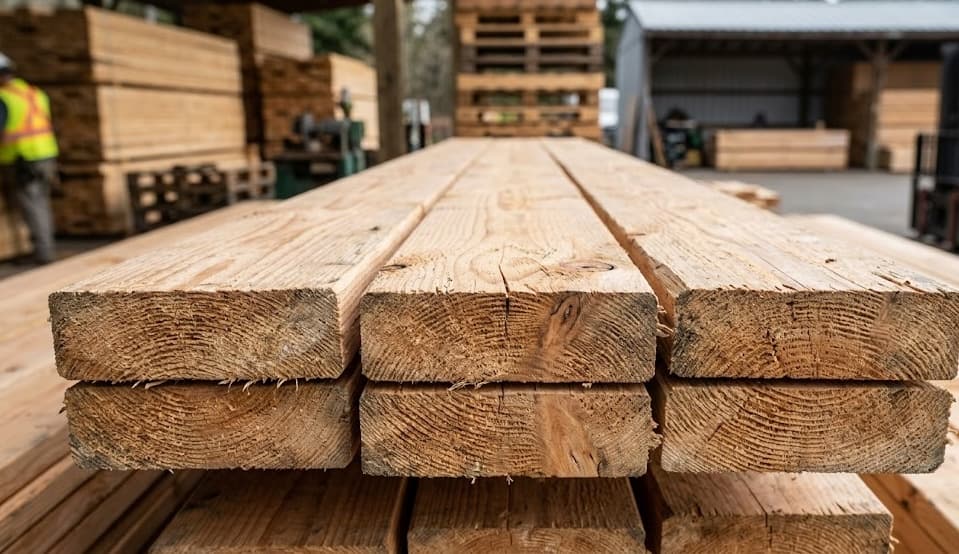
Environmental Impact of Reclaimed Lumber
Lower embodied energy compared to new lumber production
CO2 sequestered per 1,000 board feet of reclaimed wood kept in service
Waste diversion — every board reused is one not landfilled
Trees harvested when you choose reclaimed over new lumber
LEED (Leadership in Energy and Environmental Design)
LEED is the most widely used green building certification in the world. It awards points across several categories including Materials and Resources, Sustainable Sites, and Innovation in Design. Reclaimed lumber contributes directly to multiple LEED credits, making it one of the most efficient single-material choices for green building projects.
MR Credit: Building Product Disclosure and Optimization — Sourcing of Raw Materials
Up to 2 pointsReclaimed lumber qualifies as a "reused" material. Products that are reused or contain reused content contribute to this credit. Documentation must include the source of the reclaimed material, the percentage of reused content by cost, and verification that the material was diverted from the waste stream.
MR Credit: Construction and Demolition Waste Management
Up to 2 pointsBy sourcing reclaimed lumber instead of new material, projects divert construction waste from landfills. Additionally, if your project involves deconstruction (rather than demolition) of an existing structure, the salvaged materials contribute directly to waste diversion calculations. Target: divert 50% or 75% of waste by weight or volume.
MR Credit: Building Life-Cycle Impact Reduction
Up to 5 pointsMaintaining or reusing an existing building structure (including salvaged structural timbers) can earn up to 5 points. For new construction, demonstrating a reduction in life-cycle impact through material reuse contributes to this credit. A life-cycle assessment comparing reclaimed vs. new lumber typically shows 50-80% lower embodied energy for reclaimed materials.
Innovation Credit
1-2 pointsProjects can earn Innovation credits by demonstrating exceptional performance in sustainability. A comprehensive reclaimed materials program — documenting sources, tracking waste diversion, and quantifying carbon savings — can qualify as an Innovation credit if it goes beyond the standard requirements.
Documentation Requirements
LEED documentation for reclaimed lumber requires: a letter from the supplier confirming the reclaimed status of the material, the original source (building type, location, approximate age), chain-of-custody records if available, and calculations showing the percentage of reclaimed content by cost relative to total material costs. Lumber New Orleans provides LEED documentation packages for all qualifying purchases.
FSC (Forest Stewardship Council) Certification
FSC certification focuses on responsible forest management. While FSC primarily certifies newly harvested wood from sustainably managed forests, it also has a framework for reclaimed and recycled materials through its FSC Recycled label. This certification verifies that wood products come from reclaimed or recycled sources rather than newly harvested forests.
FSC Recycled Label
Product certificationReclaimed lumber can qualify for the FSC Recycled label if the chain of custody is documented and the material is verified as post-consumer reclaimed. This requires third-party auditing of the reclaimed lumber supplier's sourcing and tracking systems. The FSC Recycled label tells end users that the product contains 100% reclaimed or recycled material.
LEED Synergy: FSC + Reclaimed
Additional LEED pointsFSC-certified reclaimed lumber can contribute to the LEED MR Credit for Environmentally Preferable Products. Using FSC-certified materials (including FSC Recycled) for at least 50% of permanently installed wood products by cost earns 1 LEED point. This credit stacks with other reclaimed material credits.
Documentation Requirements
FSC documentation requires: a valid FSC chain-of-custody certificate from the supplier, FSC claim documentation on invoices (e.g., "FSC Recycled" with certificate number), and records showing the percentage of FSC-certified wood in the project by cost. Not all reclaimed lumber suppliers hold FSC chain-of-custody certification — verify before assuming the credit.
WELL Building Standard
The WELL Building Standard focuses on the health and wellbeing of building occupants. While WELL does not specifically credit reclaimed lumber, it addresses indoor air quality, materials transparency, and biophilic design — all areas where reclaimed lumber provides significant advantages over many conventional building materials.
Materials Concept: Material Transparency (Feature M01)
Prerequisite and OptimizationWELL requires disclosure of material ingredients. Reclaimed lumber is a single-ingredient material (solid wood) with no added chemicals, binders, adhesives, or volatile organic compounds — making ingredient disclosure straightforward. When finished with low-VOC or no-VOC finishes, reclaimed wood contributes to cleaner indoor air compared to engineered wood products that off-gas formaldehyde.
Mind Concept: Biophilia (Feature M02)
Up to 4 pointsWELL awards points for incorporating natural materials and biophilic design elements. Exposed reclaimed wood — beams, paneling, flooring, and furniture — provides direct connection to nature and natural patterns. Studies show that visible wood surfaces reduce stress, lower heart rate, and improve cognitive function among building occupants.
Air Concept: VOC Reduction (Feature A06)
Up to 3 pointsSolid reclaimed lumber emits virtually no VOCs, unlike many engineered wood products (particleboard, MDF, plywood) that contain urea-formaldehyde resins. Specifying reclaimed solid wood instead of engineered products directly contributes to meeting WELL air quality thresholds for formaldehyde and total VOCs.
Documentation Requirements
WELL documentation for materials includes: material safety data sheets (MSDS) — for solid reclaimed wood this is straightforward, emissions testing data if required (reclaimed solid wood typically tests well below any VOC threshold), and evidence of biophilic design integration through architectural drawings and finish schedules showing natural wood surfaces.
Living Building Challenge
The Living Building Challenge is the most rigorous green building certification in the world. It requires net-zero energy, net-zero water, and strict materials vetting through its Red List of prohibited chemicals. Reclaimed lumber is one of the most Living-Building-Challenge-friendly materials available because it is a natural, single-ingredient product that avoids virtually all Red List chemicals.
Materials Petal: Red List Free (Imperative 11)
Required for certificationThe Living Building Challenge prohibits hundreds of chemicals commonly found in building materials. Solid reclaimed wood is inherently Red List free — it contains no PVC, no formaldehyde, no halogenated flame retardants, no phthalates, and no other Red List chemicals. This makes it one of the easiest materials to document for Red List compliance.
Materials Petal: Responsible Sourcing (Imperative 13)
Required for certificationThe LBC requires that all wood be FSC-certified or salvaged/reclaimed. Reclaimed lumber satisfies this imperative directly without the need for FSC certification. Documentation must show the source of the reclaimed wood and confirm it was diverted from the waste stream.
Materials Petal: Net Positive Waste (Imperative 14)
Required for certificationUsing reclaimed materials contributes to the net-positive waste imperative by demonstrating material reuse and waste diversion. The project must divert a high percentage of construction waste and demonstrate that materials were sourced responsibly.
Documentation Requirements
Living Building Challenge documentation is the most demanding of any certification. It requires: Declare labels for every product (or equivalent documentation), Red List chemical attestation from suppliers, sourcing documentation showing origin and chain of custody, and proof that all wood is either FSC-certified or salvaged. Reclaimed lumber simplifies several of these requirements because of its single-ingredient nature.
Green Globes
Green Globes is an alternative to LEED that uses an online assessment and third-party verification process. It awards one to four Green Globes based on overall environmental performance. The system evaluates materials and resources, including credits for recycled and reclaimed content, waste reduction, and life-cycle assessment.
Materials and Resources: Resource Reuse
Up to 30 points (within Materials section)Green Globes awards points for the percentage of reused materials by cost in the project. Reclaimed lumber counts directly as reused material. Higher percentages earn more points — projects using significant quantities of reclaimed lumber can earn maximum credits in this category.
Materials and Resources: Waste Minimization
Up to 20 pointsSourcing reclaimed materials reduces overall construction waste. If the project also involves deconstruction of existing structures, additional waste minimization points are available. Green Globes evaluates the waste diversion plan and actual diversion rates.
Life-Cycle Assessment
Up to 35 pointsGreen Globes allows projects to use whole-building life-cycle assessment. Reclaimed materials have significantly lower embodied energy, global warming potential, and resource depletion than new materials. Substituting reclaimed lumber for new lumber in an LCA model typically improves scores across all impact categories.
Documentation Requirements
Green Globes documentation for reclaimed materials includes: supplier documentation confirming reclaimed status, percentage calculations by cost, waste management plan showing diversion rates, and LCA data if pursuing life-cycle credits. The Green Globes online tool guides users through documentation requirements.
National Green Building Standard (NGBS)
The NGBS (ICC 700) is the only residential green building standard approved by ANSI (American National Standards Institute). It is particularly relevant for single-family homes, multifamily buildings, and residential remodels. The standard awards points for resource efficiency, including the use of reclaimed and recycled materials.
Resource Efficiency: Reused Materials
Up to 8 pointsNGBS awards points for incorporating reused or salvaged materials into the project. Points scale based on the value of reused materials relative to total material costs. Reclaimed lumber used for structural elements, flooring, paneling, trim, and cabinetry all qualify.
Resource Efficiency: Waste Reduction
Up to 6 pointsUsing reclaimed materials inherently reduces the demand for new resources and the waste generated by new material manufacturing. Additional points are available for construction waste management plans that include salvage and recycling protocols.
Resource Efficiency: Life-Cycle Analysis
Up to 4 pointsProjects that demonstrate reduced environmental impact through life-cycle analysis can earn additional points. Reclaimed lumber improves LCA scores in embodied energy, carbon sequestration, and raw resource consumption categories.
Indoor Environmental Quality: Low-Emission Materials
Up to 5 pointsSolid reclaimed wood finished with low-VOC products contributes to better indoor air quality. NGBS awards points for using low-emission materials and finishes, and uncoated solid wood is among the lowest-emission materials available.
Documentation Requirements
NGBS documentation includes: a third-party verification by a certified NGBS Green Verifier, supplier letters confirming reclaimed status, cost calculations showing the percentage of reclaimed content, and records of low-VOC finishes applied to the reclaimed wood.
How Lumber New Orleans Supports Your Green Building Goals
Certification Documentation
We provide documentation packages tailored to your specific certification. LEED letters, chain-of-custody records, source verification, and reclaimed-content calculations — we prepare the paperwork so your project team can submit with confidence.
Sourcing Consultation
Our team can help you identify which reclaimed products contribute the most points for your target certification. We will review your material specifications and recommend substitutions that maximize your certification score.
Carbon Calculations
We provide carbon-impact data for our reclaimed products, including embodied energy comparisons with new materials. This data supports life-cycle assessment (LCA) credits across multiple certification systems.
Waste Diversion Tracking
For projects involving deconstruction, we track salvage quantities, waste diversion rates, and material destinations. This documentation supports waste management credits in LEED, Green Globes, and NGBS.
Architect and Contractor Support
We work directly with your design and construction team. We attend project meetings, provide technical specifications, coordinate delivery schedules, and ensure our materials meet the requirements specified in the contract documents.
Custom Reporting
Need data in a specific format for your certification application? We customize our documentation to match the requirements of your certifying body and third-party verifier. We have experience with all major green building rating systems.
Pursuing a Green Building Certification?
Let us help you maximize your reclaimed material credits. Contact our team with your certification target and project details, and we will build a materials and documentation strategy that supports your goals.